


The ideal air fryer varies for each individual. A perfect choice aligns with specific kitchen needs and cooking habits. Statistics highlight the growing adoption of these appliances; 60% of all households in the United States currently own an air fryer. This handbook provides essential factors for a personalized selection, ensuring readers find the best Air Fryers for their homes.
Key Takeaways
- Match air fryer capacity to your household size. Small families need 2-4 quarts. Medium families need 5-7 quarts. Large families need 8 quarts or more.
- Choose between basket, oven, or dual-basket air fryers. Basket models are compact. Oven models offer more functions. Dual-basket models cook two foods at once.
- Look for a wide temperature range and good wattage. This helps cook different foods well. Higher wattage means faster cooking.
- Decide between digital or analog controls. Digital controls offer precise settings. Analog dials are simpler to use.
- Check for important safety features. These include automatic shut-off and overheat protection. A cool-touch outside is also good.
- Consider how easy it is to clean. Look for dishwasher-safe parts. Good non-stick coatings make cleaning simple.
- Set a budget for your air fryer. Entry-level models are basic. Mid-range models offer more features. Premium models have advanced technology and last longer.
Understanding Your Needs for Air Fryers
Selecting the right air fryer begins with a clear understanding of individual cooking habits and household dynamics. The ideal appliance seamlessly integrates into a user’s lifestyle, enhancing kitchen efficiency.
Determining Ideal Air Fryer Capacity
Capacity stands as a primary consideration when choosing an air fryer. It directly impacts the quantity of food one can prepare at once, influencing cooking efficiency and convenience.
Capacity for Single Users or Small Households
Single individuals or small households typically require less cooking volume. A compact air fryer efficiently handles snacks, side dishes, or meals for one to two people. Models like the 2-quart Chefman TurboFry are suitable for quick snacks and small meals. The 4-quart Ninja AF101 Air Fryer offers a good balance of compactness and cooking surface for single users who occasionally cook for two. The 4-quart Instant Vortex Plus provides overall functionality with minimal storage requirements. For those seeking an affordable and straightforward option, a compact 2-quart Chefman model is available. The 2.6-quart Dashi Tasti is also noted for its efficiency and suitability for quick, solo meals.
Capacity for Medium-Sized Families
Medium-sized families, generally three to four people, benefit from a larger capacity. Air fryers in the 5- to 7-quart range often accommodate a small whole chicken, a batch of chicken wings, or multiple servings of vegetables. This size allows for preparing main dishes or larger side dishes without needing multiple cooking cycles.
Capacity for Large Families or Entertaining
Large families or individuals who frequently entertain guests require substantial capacity. Air fryers with 8 quarts or more, or oven-style models, prove most effective. These larger units handle bigger batches of food, such as a family-sized portion of fries, multiple steaks, or even a small turkey. They reduce cooking time for large meals by accommodating more food simultaneously.
Matching Air Fryer Size to Kitchen Space
Beyond cooking capacity, the physical dimensions of an air fryer play a crucial role. Kitchen space often dictates the practical size limit for any appliance.
Countertop Footprint Considerations
Before purchasing, users should measure their available countertop space. Air fryers come in various shapes, including compact basket styles and larger oven-style units. Basket models often have a smaller footprint but can be taller. Oven-style air fryers typically occupy more horizontal space but offer greater versatility. Consider the depth, width, and height of the chosen model to ensure it fits comfortably under overhead cabinets and does not obstruct other kitchen activities.
Storage Solutions for Various Air Fryer Sizes
Some users prefer to store their air fryer when not in use. Smaller, basket-style models easily fit into standard kitchen cabinets or pantries. Larger, oven-style Air Fryers, however, may require dedicated storage space due to their bulk and weight. Assess the ease of moving the appliance from storage to the countertop. A heavier, larger unit might become a permanent fixture on the counter due to its cumbersome nature.
Exploring Air Fryer Types
The market offers diverse air fryer designs, each catering to specific cooking preferences and kitchen setups. Understanding these types helps consumers select the most suitable appliance for their needs.
Basket-Style Air Fryers
Basket-style air fryers represent the traditional design, featuring a pull-out drawer with a removable basket.
Advantages of Basket Models
Basket air fryers offer several benefits for everyday cooking. They provide efficient cooking processes, ensuring quick and even meal preparation. Users find them straightforward and user-friendly, making them suitable for all cooking skill levels. Their compact design makes them ideal for kitchens with limited counter space. The small cooking chamber and rapid temperature increase contribute to faster cooking times, often preheating in under five minutes. These models excel at making snacks like fries, nuggets, and wings. They are typically more affordable and easier to store due to their smaller footprint. The removable basket also simplifies cleaning, as users can easily wash it with other dishes.
Limitations of Basket Models
Despite their advantages, basket-style air fryers have certain limitations. They typically restrict users to smaller servings of food. While some larger models can accommodate up to four salmon fillets, they generally cook only one item at a time. Food can also burn more easily if positioned too close to the top heating element.
Air Fryer Oven Models
Air fryer oven models combine the functionality of an air fryer with a toaster oven, offering greater versatility.
Benefits of Oven-Style Air Fryers
Oven-style air fryers provide a cost-effective solution, eliminating the need to purchase a separate toaster oven and air fryer. This design saves valuable counter space. These appliances prove more useful than several small appliances, especially when cooking for crowds or preparing larger foods. They often accommodate 12-inch pizzas or multiple dishes simultaneously. These all-in-one units can bake, broil, and air fry, offering a convenient and healthier alternative to deep frying.
Considerations for Oven Models
Consumers should consider several factors when choosing an oven-style air fryer. These models boast a larger capacity, making them suitable for bigger meals. They often include additional functions like baking, toasting, and grilling. The presence of multiple racks allows for preparing larger meals, though they may occupy more counter space than basket-style models. Tray models often feature clear glass doors, allowing users to monitor food during cooking. While they deliver good results, they may not achieve the same extra-crunchy texture as dedicated basket air fryers due to larger interior capacities. Toaster oven-style air fryers tend to be pricier than most standard basket models. Most feature manual controls, though digital options offer greater precision.
Dual-Basket Air Fryers
Dual-basket air fryers feature two separate cooking compartments, enhancing cooking flexibility.
Efficiency of Dual-Basket Systems
Dual-basket air fryers significantly improve cooking efficiency. They allow users to cook multiple foods simultaneously, each with independent temperature settings. This feature means complete meals can finish cooking at the same time, reducing overall preparation time. For instance, one basket can cook chicken while the other prepares vegetables. These systems also offer larger and smaller drawers for variety, and some models allow combining the two independent cooking zones into one large area for greater versatility.
Potential Drawbacks of Dual-Basket Air Fryers
Dual-basket air fryers typically require more counter space due to their two-compartment design. They are generally wider than single-basket models. For example, a Philips 5000 Series Dual Basket Airfryer measures approximately 45cm in width. The capacity of each individual basket in a twin air fryer is often smaller than that of an average-sized single air fryer. For instance, a 9.5L dual-zone model might only offer 4.75L per basket, whereas a single-drawer model could have an 8L capacity. These models may also have a higher initial cost due to their enhanced features and increased capacity.
Multi-Functional Air Fryers
Multi-functional air fryers offer enhanced versatility in the kitchen. These appliances combine air frying capabilities with other cooking methods. They provide a comprehensive solution for various culinary tasks.
Air Fryer Toaster Oven Combos
Air fryer toaster oven combos integrate several kitchen functions into one unit. These appliances typically perform air frying, toasting, baking, broiling, and sometimes even dehydrating. Consumers benefit from significant counter space savings. Instead of owning a separate toaster, oven, and air fryer, one device handles multiple roles. These combos often feature a larger internal capacity than traditional basket-style air fryers. This allows users to cook bigger meals, such as a whole chicken or multiple trays of cookies. Many models include multiple rack positions, which further enhances cooking flexibility. Users can toast bread on one level while baking a casserole on another. The transparent door on most toaster oven combos allows for easy monitoring of food. This eliminates the need to open the appliance, which helps maintain consistent cooking temperatures. These units are ideal for individuals seeking a versatile appliance that can replace several single-purpose devices.
Pressure Cooker Air Fryer Hybrids
Pressure cooker air fryer hybrids represent another innovative multi-functional category. These appliances combine the speed of pressure cooking with the crisping ability of air frying. Users can quickly tenderize meats, stews, or vegetables using the pressure cooking function. Immediately after, they can switch to the air frying lid to achieve a crispy, golden-brown finish. This dual functionality creates dishes that are both tender inside and crunchy outside. For example, one can pressure cook a whole chicken to ensure juiciness, then air fry it for a perfectly crispy skin. This eliminates the need to transfer food between different appliances. These hybrids often come with interchangeable lids, one for pressure cooking and one for air frying. This design makes them highly efficient for preparing complex meals with varied textures. They are particularly useful for busy individuals who desire quick meal preparation without compromising on taste or texture. These advanced Air Fryers offer a convenient way to achieve diverse cooking results from a single appliance.
Key Performance and Feature Considerations for Air Fryers

Evaluating an air fryer’s performance and features helps consumers make an informed decision. These aspects directly influence cooking results, user experience, and overall satisfaction.
Temperature Range and Wattage
Temperature and wattage are fundamental to an air fryer’s cooking capability. They dictate how quickly and effectively the appliance cooks various foods.
Optimal Temperature for Versatility
A wide temperature range enhances an air fryer’s versatility. Most models offer temperatures from approximately 180°F (80°C) to 400°F (200°C). This range allows users to perform diverse cooking tasks. Lower temperatures are suitable for dehydrating fruits or making jerky. Higher temperatures achieve crispy textures for fries, chicken wings, and roasted vegetables. An air fryer with a broad temperature spectrum accommodates a greater variety of recipes and cooking styles.
Wattage and Cooking Speed Impact
Wattage directly correlates with an air fryer’s power and heating efficiency. Higher wattage generally means faster preheating times and quicker cooking. Air fryers typically operate within a range of 800 to 2000 watts, with specific wattage depending on the model’s size. Smaller air fryers, often 2 quarts or less, usually use between 800 and 1300 watts. Family-sized models, ranging from 3 to 6 quarts, commonly have a wattage between 1200 and 1800 watts. Extra-large air fryers, around 12 quarts, can require up to 2000 watts. The average wattage consumption for a typical air fryer is approximately 1500 watts. Consumers should consider their electrical outlets’ capacity when selecting a high-wattage model.
Control Types: Digital vs. Analog
Air fryers come with either digital or analog controls, each offering distinct advantages in terms of precision and user experience.
Precision of Digital Controls
Digital controls provide superior precision for temperature and time settings. Users can often adjust temperatures in increments of 5 or 10 degrees, allowing for highly accurate cooking. Digital timers also offer precise settings and frequently include an automatic shut-off feature for safety and convenience. This precision ensures consistent cooking results, which is crucial for delicate recipes or specific food requirements.
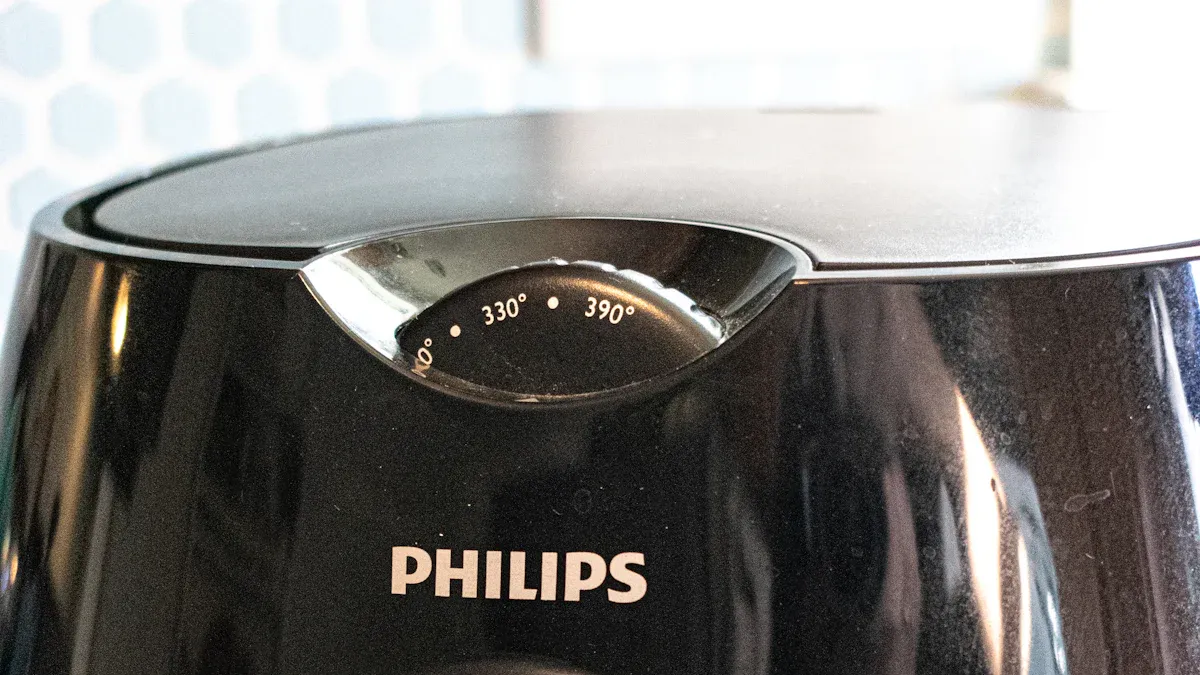
Simplicity of Analog Dials
Analog dials offer a straightforward and intuitive user interface. They are easy to operate, often involving simple twists to set temperature and time. However, analog air fryers provide less precise control. Temperature settings are typically approximate, indicated by a dial with markings every 25-50 degrees. Their mechanical timers may also be less accurate compared to digital counterparts. Analog models suit users who prefer simplicity over granular control.
Smart Features and App Connectivity
Modern air fryers increasingly incorporate smart features and app connectivity. These advanced functionalities allow users to control the appliance remotely via a smartphone or tablet. Users can start, stop, or adjust cooking settings from another room. Many apps offer access to a vast library of recipes, often with pre-programmed settings that sync directly to the air fryer. Some models even provide cooking progress notifications, enhancing convenience and allowing for better meal planning.
Pre-set Programs and Cooking Functions
Pre-set programs and various cooking functions significantly enhance an air fryer’s utility, simplifying the cooking process for many users.
Value of One-Touch Pre-sets
One-touch pre-sets offer immense convenience, especially for common dishes. These programs automatically adjust the time and temperature for specific foods like fries, chicken, fish, or baked goods. Users simply select the desired pre-set, and the air fryer handles the rest. This feature reduces guesswork and ensures consistent results, making cooking easier for beginners and busy individuals. High-quality air fryers often include an array of preset functions and cooking modes such as roasting, toasting, and baking. Some models, like infrared air fryers, even feature a ‘Crispy Finish’ function for optimal texture.
Customization Options for Recipes
While pre-sets offer convenience, customization options provide flexibility for diverse recipes. Users can manually adjust temperature and time settings to suit their specific cooking needs or personal preferences. This allows for experimentation and fine-tuning of recipes. An air fryer is a versatile appliance that can air fry, roast, bake, broil, crisp, dehydrate, and reheat foods. This broad range of functions means users can adapt the appliance to almost any culinary task, from preparing a quick snack to a full meal.
Noise Levels During Operation
The operational noise level of an air fryer significantly impacts the kitchen environment, especially in open-plan living spaces. A noisy appliance can disrupt conversations, television viewing, or simply create an unpleasant atmosphere. Consumers often overlook this factor, but it becomes a crucial consideration for daily use. Understanding the typical noise output helps buyers select a model that integrates seamlessly into their home.
Identifying Quieter Air Fryer Models
Manufacturers design air fryers with powerful fans to circulate hot air efficiently. This fan operation is the primary source of noise. Noise levels in air fryers typically range from 40 decibels (dBA) to 60 dBA. A 40 dBA level is comparable to a quiet office, while 60 dBA resembles a normal conversation in a restaurant. Some models, particularly those with higher wattage or less advanced fan technology, can exceed this range.
When evaluating models, consumers should look for specifications regarding decibel levels. Quieter models often feature advanced motor designs and insulated casings to minimize sound output. The table below illustrates typical noise levels for various air fryer models and settings:
| Air Fryer Model/Setting | Noise Level (dB) |
|---|---|
| Air Fryer Black 15L (Low Temp: 100°C – 120°C) | 45 – 50 |
| Air Fryer Black 15L (Medium Temp: 150°C – 180°C) | 55 – 60 |
| Air Fryer Black 15L (High Temp: 200°C – 220°C) | 65 – 70 |
| Tower Digital Air Fryer (Highest Setting) | 75 – 80 |
| Air Fryer 5L 220V (High Settings) | 60 – 65 |
As the table shows, noise levels can vary significantly, even within the same model at different temperature settings. Higher temperatures often require the fan to work harder, increasing the decibel output. A model operating at 45-50 dB produces a gentle hum, barely noticeable in most kitchens. Conversely, an appliance reaching 75-80 dB generates noise comparable to a vacuum cleaner, which can be quite disruptive. Prioritizing models with lower decibel ratings ensures a more pleasant cooking experience. Consumers should check product specifications and reviews for information on noise performance before making a purchase.
Ease of Use and Maintenance for Air Fryers
An air fryer‘s long-term value depends significantly on its ease of use and maintenance. Consumers prioritize appliances that simplify cooking and cleaning. These factors contribute to a positive user experience and ensure the appliance remains a valuable kitchen tool.
Cleaning and Durability
Effective cleaning and robust construction are crucial for any kitchen appliance. An air fryer with easy-to-clean components and durable materials offers lasting convenience.
Dishwasher-Safe Components
Dishwasher-safe components greatly simplify the cleaning process. Many air fryer baskets, trays, and racks are designed for safe cleaning in a dishwasher. This feature saves time and effort for the user. It also ensures thorough sanitation after each use. Checking product specifications for this detail is advisable.
Non-Stick Coating Quality
The quality of the non-stick coating directly impacts both cooking performance and cleaning ease. A superior non-stick surface prevents food from sticking, making cleanup effortless. Common materials used for non-stick coatings include:
- PTFE (polytetrafluoroethylene) coating
- Ceramic coating (specifically for 7000 Series Airfryer meshes)
These coatings ensure food releases easily and residues wipe away quickly. High-quality coatings also resist scratching and wear over time.
Material Durability and Longevity
The overall durability of an air fryer’s materials determines its longevity. Stainless steel and high-grade plastics are common choices for exterior casings. These materials resist dents, scratches, and general wear. Internal components, such as heating elements and fans, also require robust construction. A well-built air fryer withstands frequent use and maintains its performance over many years.
User Interface and Ergonomics
An intuitive user interface and ergonomic design enhance the daily cooking experience. These elements make operating the air fryer straightforward and comfortable.
Intuitive Display and Buttons
An intuitive display and clearly labeled buttons simplify operation. Digital displays often show temperature, time, and pre-set programs. Large, responsive buttons or a clear touchscreen allow for easy adjustments. Users can quickly select cooking modes and monitor progress. A well-designed interface reduces the learning curve for new users.
Handle Design and Basket Removal
The design of the handle and the ease of basket removal are critical for safety and convenience. A sturdy, cool-touch handle ensures safe handling of hot baskets. The basket should slide in and out smoothly without sticking. Easy removal facilitates shaking food during cooking and transferring cooked items. This ergonomic consideration prevents accidental burns and makes the cooking process more efficient.
Safety and Design Aspects of Air Fryers
Consumers prioritize safety and design when selecting kitchen appliances. An air fryer’s features and appearance contribute significantly to user satisfaction and kitchen integration.
Essential Safety Features
Safety features are paramount for any cooking appliance. Manufacturers incorporate several mechanisms to ensure safe operation.
Automatic Shut-Off Mechanisms
Automatic shut-off mechanisms act as a built-in safety assistant. This feature activates at the end of the cooking cycle. It conserves energy, prevents overcooking, and reduces overheating risks. This mechanism provides peace of mind for users.
Overheat Protection
Overheat protection is a critical safety component. Temperature sensors monitor internal heat levels. They automatically shut off or cool down the appliance if temperatures exceed safe thresholds. This prevents thermal hazards and protects the appliance from damage.
Cool-Touch Exterior
A cool-touch exterior provides an additional layer of protection against burns. Insulated housing prevents heat transfer to the outer surface. This design reduces the risk of accidental burns during operation. Other safety features include UL, ETL, or CSA certifications, which ensure the appliance meets established safety standards. Non-slip feet provide secure grip and stability on countertops, minimizing the risk of the appliance shifting or tipping.
Aesthetic and Design Choices
An air fryer’s appearance and design choices influence its integration into a kitchen space. Consumers often seek appliances that complement their home decor.
Matching Your Kitchen Decor
Air fryers come in various designs. Many models are typically bulky, pod-shaped machines, often made of plastic. Some alternative designs resemble toaster ovens or feature glass bowls, offering different aesthetic appeals. The Fritaire, for example, uses a glass bowl and boasts an “Atomic Era, Jetsons-esque vibe.” This allows consumers to choose a style that matches their kitchen’s aesthetic.
Available Colors and Finishes
Common colors for air fryers include black, gray, and red. Manufacturers face challenges introducing diverse colors due to heat discoloration. Plastic can change color over time; white might turn green, and green might turn yellow. Black is less noticeably affected by heat. Despite these challenges, some brands offer unique options like mauve and lavender, providing more choices for consumers.
Brand Reputation and Warranty
Brand reputation and warranty coverage offer assurances of quality and support. Consumers often rely on these factors when making purchasing decisions.
Researching Reliable Air Fryer Brands
Researching reliable brands helps consumers choose high-performing and durable appliances. Consumer Reports highlights brands like Chefman, Cosori, and Instant for their top performance and reliability. The Instant Vortex Plus 6-Quart Air Fryer also receives recognition as a ‘Best Overall’ choice from Food Network, indicating its high reliability.
Understanding Warranty Coverage
Understanding warranty coverage protects a consumer’s investment. Many manufacturers offer a 90-day money-back guarantee, allowing risk-free trials. A two-year limited warranty often covers manufacturing defects and malfunctions. Cuisinart provides three years of coverage for manufacturer’s defects and faulty workmanship. Ninja offers one year of coverage against manufacturer’s defects. Extended warranty coverage is also available for an additional cost from some retailers, covering accidental damage and internal failures.
Budgeting for Your Air Fryer Purchase
Selecting an air fryer involves financial considerations. Prices vary significantly across different models. Consumers can find options suitable for various budgets. Understanding what each price tier offers helps buyers make an informed decision.
Entry-Level Air Fryer Options
Budget-friendly air fryers provide essential functionality without a high cost. These models suit individuals or small households seeking basic air frying capabilities.
Features to Expect in Budget Models
Entry-level air fryers typically offer straightforward operation. They often feature analog dials for setting time and temperature. Their capacity usually ranges from 2 to 4 quarts, suitable for single servings or small batches. These models focus on the core function of air frying, providing crispy results for common foods like fries and chicken nuggets. They generally lack advanced features such as digital displays or multiple cooking presets.
Balancing Cost and Performance
Budget models prioritize affordability. They deliver satisfactory performance for basic air frying tasks. Consumers balance the lower cost with fewer advanced features. These appliances offer an excellent starting point for those new to air frying or with limited kitchen space. They prove efficient for quick, simple meals.
Mid-Range Air Fryer Choices
Mid-range air fryers offer an enhanced feature set compared to entry-level options. They provide a balance between advanced capabilities and reasonable pricing.
Enhanced Features in Mid-Tier
Mid-tier models introduce several convenient features. They often include digital touchpads for precise control of cooking time and temperature. Many offer additional presets for specific foods, simplifying meal preparation. Users find functions like dehydration, baking, and rotisserie cooking modes in this category. Some models provide indicators to notify users when to check on cooking progress or when the basket reaches its intended temperature. A ‘keep warm’ function also frequently appears in these appliances.
Value for Money Considerations
Mid-range air fryers represent a strong value proposition. They combine improved functionality with a moderate price point. Consumers gain greater versatility and convenience without investing in premium models. These appliances suit families or individuals who cook frequently and desire more control and options.
Premium Air Fryer Investments
Premium air fryers represent the pinnacle of technology and design. They offer advanced features, superior durability, and often a larger capacity.
Advanced Technology and Durability
High-end models incorporate cutting-edge technology. They often feature a PTFE-free nonstick finish, utilizing a ‘nano-ceramic’ coating for health and longevity. This coating is free of PFAS. Some premium air fryers boast MaxCrisp Technology, which uses 450°F superheated air for exceptionally crispy results with minimal oil. These appliances often provide 6-in-1 functionality, including Max Crisp, Air Fry, Air Roast, Bake, Reheat, and Dehydrate. Many premium brands also offer replaceable parts, such as crisper trays and baskets, extending the product’s lifespan.
Justifying Higher Price Points
The higher cost of premium air fryers reflects their advanced technology, enhanced durability, and multi-functional capabilities. Consumers justify these investments through superior cooking performance, greater versatility, and a longer product lifespan. These models cater to serious home cooks or those who prioritize convenience, precision, and robust construction in their kitchen appliances.
Selecting the perfect air fryer ultimately depends on individual kitchen needs and cooking habits. Buyers should carefully review capacity, appliance type, key features, ease of use, safety aspects, and budget. Prioritizing specific requirements ensures a confident decision. This comprehensive approach helps users choose the best air fryer for their home, enhancing their culinary experience.
FAQ
What capacity air fryer do I need?
Single users or small households benefit from 2-4 quart models. Medium families (3-4 people) often choose 5-7 quart units. Large families or frequent entertainers require 8 quarts or more, or oven-style models.
What is the difference between basket and oven-style air fryers?
Basket models are compact and cook quickly, ideal for snacks. Oven-style air fryers offer larger capacity and multi-functionality like baking and toasting. They suit bigger meals and replace several appliances.
Are dual-basket air fryers worth the investment?
Dual-basket air fryers enhance cooking efficiency. They allow simultaneous preparation of different foods at varied temperatures. This feature reduces overall meal preparation time, making them valuable for busy households.
What wattage is best for an air fryer?
Higher wattage generally means faster preheating and quicker cooking. Air fryers typically range from 800 to 2000 watts. Consider your electrical outlets’ capacity when selecting a high-wattage model for optimal performance.
How do I clean my air fryer effectively?
Many air fryer baskets and trays are dishwasher-safe. Non-stick coatings simplify cleanup; look for PTFE or ceramic. Regular cleaning of components ensures hygiene and maintains the appliance’s performance and longevity.
What essential safety features should an air fryer have?
Essential safety features include automatic shut-off mechanisms, overheat protection, and a cool-touch exterior. These features prevent accidents, conserve energy, and protect the appliance from damage during operation.
Are expensive air fryers always better than budget models?
Premium air fryers offer advanced technology, enhanced durability, and multi-functional capabilities. They provide superior cooking performance and a longer lifespan. Budget models offer basic functionality at a lower cost, suitable for simple tasks.