
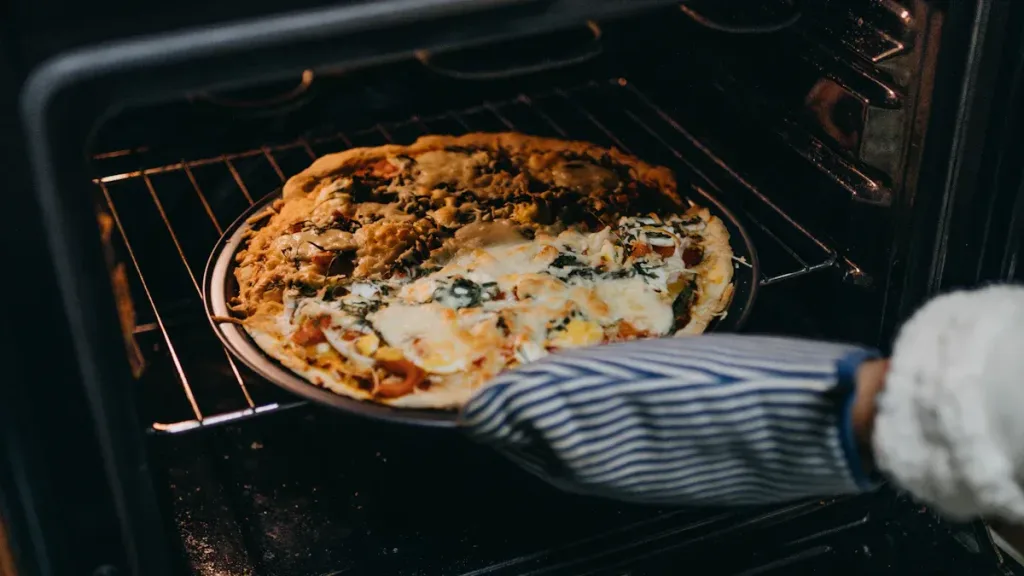
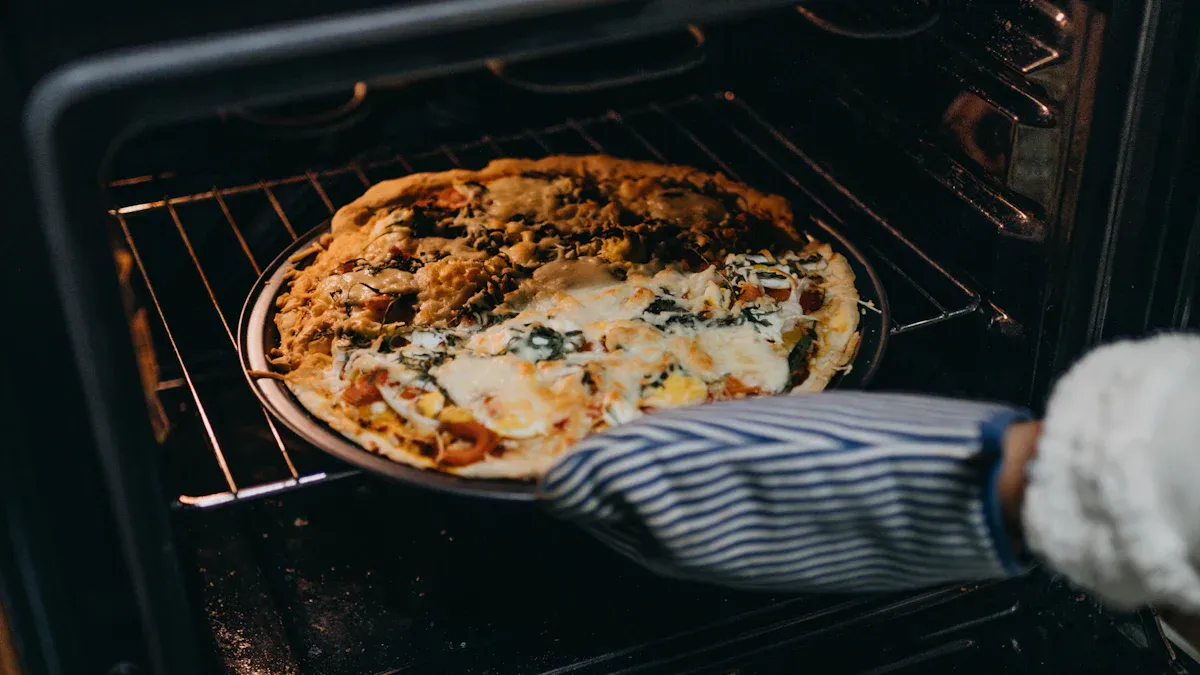
Selecting the right indoor pizza oven requires careful consideration. Individuals first assess their cooking needs, determining how frequently they will craft pizzas. They also identify available kitchen space, whether for a compact countertop unit or a dedicated built-in model. Establishing a budget guides choices, from an entry-level Automatic Electric Pizza Maker Machine to a high-end Pizza Oven. Recognizing key factors like oven type, heating method, and desired pizza quality helps make an informed decision for the perfect indoor pizza oven.
Key Takeaways
- Choose an indoor pizza oven based on your cooking needs, kitchen space, and budget.
- Countertop electric ovens are easy to use and fit small kitchens; built-in ovens offer a sleek look for serious pizza makers.
- High temperatures, around 500°F or more, are key for making authentic, crispy pizza crusts.
- Cordierite and ceramic stones help keep heat steady, making your pizza crust extra crispy.
- Always check the oven’s size to fit your kitchen and the pizza sizes you want to make.
- Look for safety features like overheat protection and cool-touch exteriors to prevent accidents.
- Clean your oven regularly and follow care instructions to make it last longer and work better.
- Gas ovens heat up fast but need professional setup and good ventilation; electric ovens are easier to use but may heat slower.
Understanding Indoor Pizza Oven Types for Your Home
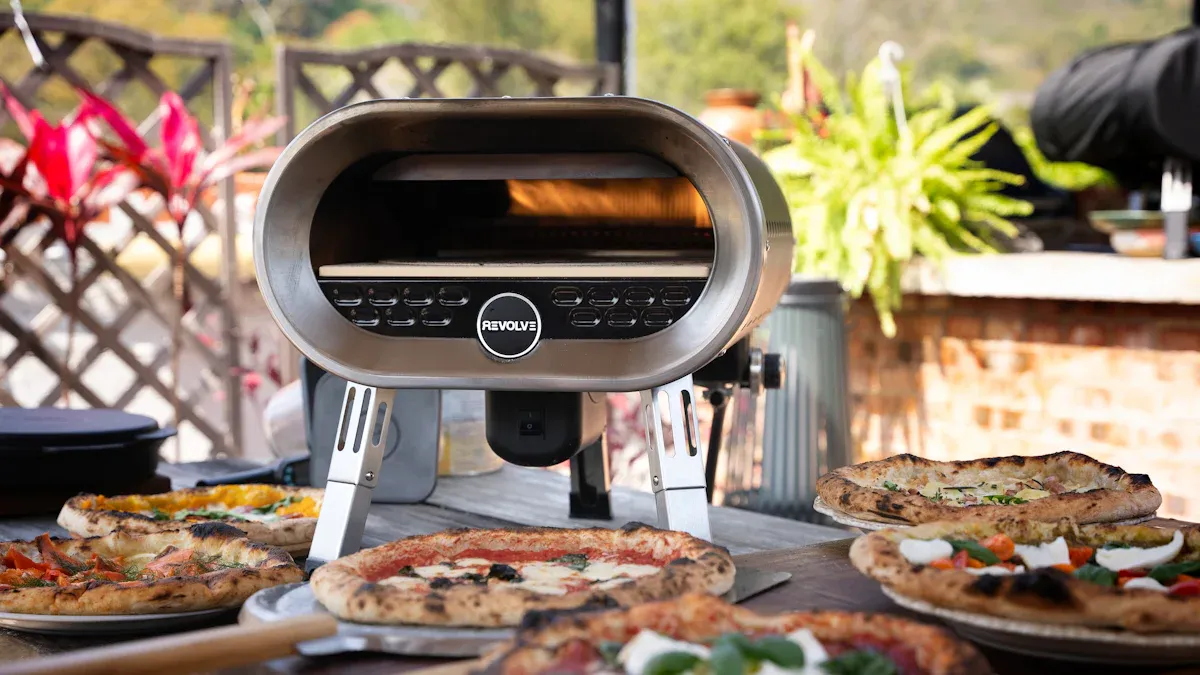
Selecting the right indoor pizza oven involves understanding the different types available. Each category offers distinct advantages, catering to various kitchen setups and cooking preferences. Consumers can choose from countertop, built-in, or portable models, each designed for specific user needs.
Countertop Electric Indoor Pizza Ovens
Countertop electric models represent a popular choice for many households. They offer a straightforward approach to homemade pizza.
Convenience and ease of use
These ovens provide immediate functionality. Users simply plug them into a standard outlet and begin cooking. Their intuitive controls make operation simple for any home chef.
Suitability for smaller spaces
Countertop ovens require minimal kitchen real estate. They fit comfortably on most kitchen counters, making them ideal for apartments, condos, or smaller kitchens where space is at a premium.
Plug-and-play operation
No complex installation is necessary for these units. Users can enjoy delicious, homemade pizza without any permanent modifications to their kitchen. This ease of setup appeals to those seeking quick culinary solutions.
Built-in Electric Indoor Pizza Ovens
Built-in electric ovens offer a more permanent and integrated solution for pizza enthusiasts. They become a seamless part of the kitchen environment.
Integrated kitchen designs
These ovens blend perfectly with modern kitchen aesthetics. They provide a sleek, custom look, enhancing the overall design of the cooking space. This integration creates a professional and cohesive appearance.
Dedicated pizza enthusiasts
Individuals passionate about crafting gourmet pizzas often choose built-in models. These ovens offer consistent performance and durability for frequent use, meeting the demands of serious home pizzaiolos.
Permanent installation considerations
Built-in ovens require professional installation. Homeowners must plan for dedicated electrical circuits and ensure proper ventilation. This ensures safe and efficient operation within the kitchen structure.
Portable Indoor/Outdoor Pizza Ovens (Electric/Gas)
Portable ovens offer exceptional flexibility, allowing users to cook in various environments. They combine convenience with versatility.
Versatility for various cooking environments
These ovens provide the freedom to cook both indoors and outdoors. Users can enjoy pizza night in the kitchen or take the oven to the patio for an al fresco dining experience.
Dual-purpose functionality
Many portable models serve both indoor and outdoor cooking needs. This adaptability makes them a highly practical choice for those who enjoy entertaining or cooking in different settings.
Mobility and storage options
Their design prioritizes easy movement and compact storage. This suits users who need flexible kitchen arrangements or wish to store the oven away when not in use. Portable and countertop models offer diverse power options:
- Electric Pizza Ovens: These use heating elements to generate thermal energy without a flame.
- Gas Pizza Ovens: These operate on various types of gas, including conventional propane, natural gas, or butane.
- Multi-Fuel Ovens: These provide flexibility by allowing the use of multiple fuel types, such as wood, gas, or charcoal. This range of power sources enhances their appeal for various cooking scenarios, from camping to backyard parties.
Specialized Indoor Pizza Oven Designs
Beyond the standard countertop and built-in models, the market offers specialized indoor pizza oven designs. These innovations cater to specific culinary desires, providing unique features for discerning users.
Wood-fired style electric ovens
Manufacturers developed wood-fired style electric ovens to replicate the distinct char and flavor of traditional wood-fired pizzas. These units often feature advanced heating elements, such as infrared or specialized top and bottom heating, which achieve extremely high temperatures. They typically incorporate a ceramic or cordierite stone that absorbs and radiates intense heat, mimicking a brick oven’s thermal mass. This design promotes rapid cooking and creates the characteristic crispy crust with leopard-spotted charring. Users experience the authentic taste of wood-fired pizza without the need for actual wood or complex ventilation systems. These ovens provide a convenient way to achieve gourmet results in a home kitchen.
Convection-enhanced models
Convection technology significantly enhances the performance of some indoor pizza ovens. These models include a fan that circulates hot air evenly throughout the cooking chamber. This forced air circulation eliminates cold spots and ensures consistent heat distribution across the pizza surface. The convection feature promotes faster cooking times and helps achieve a uniformly crispy crust and perfectly melted cheese. It also prevents one side of the pizza from cooking faster than the other. This even heat application makes convection-enhanced ovens highly efficient for busy households or those seeking consistent, high-quality results with every bake.
Multi-functional units
Some indoor pizza oven designs extend their utility beyond just baking pizza. These multi-functional units offer versatility, allowing users to prepare a wider range of dishes. They often include various cooking modes, such as roasting, baking bread, or even dehydrating. For example, a unit might feature adjustable temperature settings and different heating elements that accommodate diverse culinary tasks. This adaptability makes them a valuable addition to kitchens with limited space, as one appliance can perform the functions of several. Users gain significant flexibility, maximizing their kitchen appliance investment. These ovens appeal to individuals who appreciate efficiency and diverse cooking capabilities from a single, compact appliance.
Key Features to Consider When Choosing Your Indoor Pizza Oven
Selecting an indoor pizza oven involves evaluating several critical features. These elements directly influence the oven’s performance, the quality of the pizza it produces, and its suitability for a specific kitchen environment. Understanding these characteristics helps consumers make an informed decision.
Temperature Range and Heat-Up Time for Authentic Pizza
The ability of an indoor pizza oven to reach and maintain high temperatures quickly is paramount for authentic pizza. This factor directly impacts crust development and overall cooking efficiency.
Achieving authentic pizza crust
An authentic pizza crust, especially for styles like Neapolitan, requires intense heat. High temperatures create a rapid rise in the dough, resulting in a light, airy interior and a perfectly charred exterior. This quick cooking process locks in moisture and flavor. For an authentic Neapolitan pizza crust in a conventional home oven, experts recommend setting the oven to its highest possible temperature, typically between 500°F to 550°F (260°C to 288°C). Utilizing a pizza stone is also advised to replicate the cooking environment of a traditional stone oven.
Importance of high temperatures
High temperatures are crucial for achieving the desired texture and taste of gourmet pizza. Regular home ovens generally reach a maximum temperature of 500°F to 550°F (260°C to 290°C). This range is the optimal target for making Neapolitan pizza indoors. Outdoor pizza ovens significantly exceed these temperatures, but indoor models aim to replicate that intensity as closely as possible. To achieve a Neapolitan pizza in an indoor oven, the oven should be preheated with a pizza stone to its maximum temperature, which is typically around 500°F (260°C) or higher. This intense heat cooks the pizza rapidly, preventing the crust from drying out.
Speed of reaching optimal heat
A fast heat-up time enhances convenience and efficiency. Users do not want to wait extended periods for the oven to reach its target temperature. Ovens that preheat quickly allow for spontaneous pizza nights and reduce overall cooking time, making the process more enjoyable.
Stone Material: Cordierite vs. Ceramic in Indoor Pizza Ovens
The material of the baking stone significantly influences heat transfer and the final crust quality. Cordierite and ceramic are two popular choices, each offering distinct advantages.
Impact on heat retention
Both cordierite and thick ceramic stones effectively retain heat. This consistent heat transfer from the stone to the pizza crust is essential for achieving a crispy base. When considering materials for indoor pizza oven stones that effectively retain heat, both thick ceramic and cordierite stones are recommended to maintain a steady temperature throughout the cooking process. While cordierite is also highlighted for its durability and resistance to thermal shock, both materials are effective for heat retention.
Influence on crust crispness
The stone’s ability to absorb and radiate heat directly affects crust crispness. A hot stone rapidly cooks the bottom of the pizza, creating a desirable crispy texture. Different materials may offer subtle variations in how they interact with the dough, influencing the final crunch.
Durability and maintenance
Cordierite is known for its exceptional durability and resistance to thermal shock, meaning it can withstand rapid temperature changes without cracking. Ceramic stones are also durable but may be more susceptible to thermal shock if not handled carefully. Both materials require proper cleaning and maintenance to ensure longevity and optimal performance.
Size and Capacity of Your Indoor Pizza Oven
The physical dimensions and internal cooking space of an indoor pizza oven are practical considerations that impact kitchen integration and cooking versatility.
Matching oven dimensions to your kitchen
Consumers must measure their available counter space or cabinet opening before purchasing an oven. A compact countertop model fits smaller kitchens, while a built-in unit requires specific cabinet dimensions. Proper sizing ensures the oven integrates seamlessly into the kitchen layout.
Accommodating desired pizza sizes
The oven’s capacity dictates the maximum pizza size it can accommodate. Some ovens handle personal-sized pizzas, while others can bake larger, family-sized pies. Users should consider their typical pizza-making needs to select an oven that matches their preferred pizza dimensions.
Internal cooking space
Beyond the maximum pizza size, the internal cooking space affects overall usability. Adequate internal height allows for toppings to cook evenly without touching the heating elements. A well-designed interior ensures efficient heat circulation around the entire pizza, promoting uniform cooking.
Controls and Settings for Your Indoor Pizza Oven
The control panel of an indoor pizza oven significantly impacts its user experience and versatility. Thoughtful design in this area allows users to achieve diverse culinary results with ease.
Ease of use for different pizza styles
Intuitive controls simplify the process of baking various pizza styles. A well-designed interface allows users to quickly select settings appropriate for Neapolitan, New York, or deep-dish pizzas. Clear labeling and logical button placement reduce the learning curve. This ensures even novice chefs can produce high-quality results.
Precision temperature control
Precision temperature control is crucial for consistent pizza baking. Advanced indoor pizza ovens often feature sophisticated systems. These systems allow users to set and maintain the ideal cooking temperature for consistent and reliable results. Some models incorporate advanced PID temperature control systems. These systems maintain precision from 220-850℉, ensuring the oven reaches and holds the exact heat required for a perfect crust and toppings. This level of accuracy prevents undercooking or burning, leading to superior pizza every time.
Timer and pre-set functions
Timers and pre-set functions add convenience and consistency to the cooking process. A built-in timer helps users monitor baking duration without constant supervision. Pre-set modes, tailored for specific pizza types or cooking methods, simplify operation. Users can select a pre-set for a thin-crust pizza, and the oven automatically adjusts temperature and time. This automation ensures repeatable results and reduces guesswork.
Safety Features for Indoor Pizza Oven Operation
Safety is a paramount concern for any kitchen appliance, especially those operating at high temperatures. Indoor pizza ovens incorporate several features to protect users and their homes.
Overheat protection mechanisms
Overheat protection mechanisms prevent the oven from reaching dangerously high temperatures. These systems typically include sensors that monitor internal temperatures. If the oven exceeds a safe threshold, the mechanism automatically cuts power or reduces heat output. This prevents damage to the appliance and reduces fire risks.
Cool-touch exteriors
Cool-touch exteriors enhance safety, particularly in busy kitchens or homes with children. The outer casing of the oven remains cool to the touch, even when the interior reaches extreme temperatures. This design prevents accidental burns upon contact. It allows for safer placement on countertops and reduces concerns during operation.
Automatic shut-off
Automatic shut-off features provide an additional layer of safety. This function powers down the oven after a set period of inactivity or once a cooking cycle completes. It prevents the oven from running unnecessarily or unattended. This feature conserves energy and minimizes potential hazards. When installing an indoor pizza oven, users must also consider clearance requirements. For instance, maintain 30 inches of clearance to each side of the oven from combustible materials. Ensure 36 inches in front of the door opening for safe access. Provide 18 inches of clearance from the top of the oven to highly flammable materials. Keep 10 inches from the back of the oven to combustible materials. Maintain 30 inches from the bottom of the oven to combustible materials. For gas-powered indoor pizza ovens, proper ventilation is crucial to prevent dangerous carbon monoxide (CO) buildup. Installation of an audible carbon monoxide detector is recommended. A ducted range hood with at least 1200+ CFM is necessary for effective ventilation. The range hood should be 12 to 24 inches larger than the oven and feature stainless steel baffle filters. The duct must be large enough to remove greasy air and smoke.
Cleaning and Maintenance of Your Indoor Pizza Oven
Regular cleaning and proper maintenance extend the lifespan of an indoor pizza oven and ensure hygienic operation. Manufacturers design these appliances for ease of care.
Practicality for regular use
The design of an oven should support practicality for regular use. Surfaces that resist food adhesion and are easy to wipe down simplify daily cleaning. This encourages users to maintain the oven consistently, preventing stubborn build-up. An oven that is easy to clean promotes more frequent use.
Removable parts for easy cleaning
Removable parts significantly simplify the cleaning process. Baking plates, crumb trays, and other internal components often detach for thorough washing. Users can easily access and clean these parts in a sink or dishwasher. This ensures all food residues are removed, maintaining hygiene and preventing odors.
Material durability for longevity
The durability of materials used in construction directly impacts the oven’s longevity. Stainless steel exteriors resist corrosion and are easy to clean. High-quality baking stones, like cordierite, withstand repeated high-temperature cycles without degradation. Robust internal components ensure consistent performance over many years. Investing in an oven made with durable materials reduces the need for frequent repairs or replacements.
Power and Performance: Electric vs. Gas Indoor Pizza Oven Options
Choosing an indoor pizza oven involves understanding its power source. Electric and gas models offer distinct advantages and considerations. Each type caters to different preferences and kitchen setups.
Electric Indoor Pizza Ovens: Pros and Cons
Electric indoor pizza ovens provide a convenient option for many home chefs. They offer ease of use and consistent results.
Convenience and consistent heat
Electric ovens plug into standard outlets, making them easy to set up. They deliver consistent heat, which helps achieve uniform cooking. Users appreciate the predictable performance of electric models.
Power draw and heat limitations
Electric ovens have specific power requirements. A household electric pizza maker, a 16-inch countertop model, has a power consumption of 1600W. Another countertop pizza maker is listed with a power consumption of 1200W. An electric pizza maker, model YS32, also has a power consumption of 1200W. High-performance electric ovens, like the ALFA Professional Line – Zeno 6 Pizze Electric Oven, can have an average consumption of 6.5 kW, with maximum power reaching 18 kW. Users must ensure their electrical circuits can handle these demands.
Standard electrical requirements
Most electric indoor pizza ovens operate on standard household electricity. Smaller models typically use 120V outlets. Larger, more powerful units may require a dedicated 240V circuit. Users should check the oven’s specifications to confirm electrical compatibility.
Gas Indoor Pizza Ovens: Ventilation Considerations
Gas indoor pizza ovens offer rapid heating and intense temperatures. They require careful planning for safe operation.
High heat and speed
Gas ovens typically reach higher temperatures faster than electric models. This intense heat cooks pizzas quickly, often in minutes. The rapid cooking process creates a desirable crispy crust and perfectly melted cheese.
Installation and safety concerns
Gas ovens require professional installation. They connect to a natural gas line or use propane tanks. Proper installation ensures safe operation and prevents gas leaks. Users must prioritize safety with gas appliances.
Professional ventilation requirements
Effective ventilation is crucial for indoor gas pizza ovens. A ducted range hood is essential, not a ductless one, to effectively remove smoke and contaminants. The range hood should have a minimum of 1200 CFM for adequate air movement, with 2000 CFM recommended for higher performance. The hood should also be sized between 12 and 24 inches larger than the pizza oven to ensure sufficient coverage. Users should use stainless steel baffle filters, as they efficiently capture grease and are often dishwasher-safe. The ducting must be large enough to accommodate the airflow; a larger duct than recommended is preferable to one that is too small.
Hybrid Indoor Pizza Oven Models and Their Advantages
Hybrid indoor pizza oven models combine the best features of electric and gas. They offer enhanced versatility and control.
Combining electric and gas elements
These ovens use both electricity and gas for heating. This combination allows for precise temperature management and powerful heat output. Users can often switch between fuel sources or use them simultaneously.
Enhanced versatility and control
Hybrid models offer superior performance. They reach up to 900°F safely and achieve 750°F in 30 minutes or less. They also offer quick rebound time for ideal stone temperature, suitable for Neapolitan pizza. Advanced insulation and heat flow design contribute to faster heat-up times. Oxygenation ports beneath the burner enhance efficiency and airflow. These ovens are equipped with 12 cm of insulation around the cooking chamber to maximize heat retention and reduce energy usage. They utilize an upgraded 68,000 BTU burner, which is larger and more powerful.
Specific use cases
Hybrid ovens suit users who desire maximum flexibility and professional-grade results. They are ideal for diverse cooking styles and frequent use. Their ability to reach 900°F / 482.2°C makes them capable of producing the highest quality pizzas.
Budgeting for Your Indoor Pizza Oven: What to Expect
Understanding the financial commitment for an indoor pizza oven helps consumers make an informed purchase. Prices vary significantly based on features, brand, and type. Buyers can find options across several budget tiers, each offering different levels of performance and capabilities.
Entry-Level Indoor Pizza Oven Models
Entry-level indoor pizza ovens provide an accessible starting point for home pizza making. These models focus on basic functionality.
Features and limitations
These ovens typically offer straightforward operation and compact designs. They often reach temperatures suitable for basic pizza styles. However, they might lack the extreme heat or precise controls found in more advanced models. Users may find limitations in achieving a true Neapolitan-style crust.
Ideal for occasional use
Entry-level ovens suit individuals who plan to make pizza infrequently. They are perfect for casual pizza nights or for those exploring homemade pizza for the first time. Their simplicity makes them easy to use without a steep learning curve.
Price range and value
These models generally represent the most affordable options on the market. They offer good value for their price, providing a taste of homemade pizza without a significant investment.
Indoor pizza ovens that can make Neapolitans start at around $800.
This indicates that achieving authentic high-temperature results often requires a slightly higher initial investment.
Mid-Range Indoor Pizza Oven Options
Mid-range indoor pizza ovens strike a balance between cost and performance. They offer enhanced features compared to entry-level models.
Balancing features and cost
These ovens provide a significant upgrade in capabilities without reaching the premium price point. They often include better temperature control, faster heat-up times, and more durable construction. Consumers receive a good return on their investment.
Enhanced performance and durability
Mid-range models typically achieve higher temperatures, allowing for crispier crusts and faster cooking. Manufacturers use more robust materials, which contributes to longer product life. These ovens handle more frequent use effectively.
Popular choices and their benefits
Many popular brands offer excellent mid-range options. These ovens often feature improved baking stones and more consistent heat distribution. They benefit users seeking better quality pizzas and more reliable performance for regular use.
High-End Indoor Pizza Ovens
High-end indoor pizza ovens represent the pinnacle of home pizza-making technology. They deliver professional-grade results.
Premium performance and advanced capabilities
These ovens boast superior heating systems, precise digital controls, and often multi-fuel options. They reach extremely high temperatures quickly and maintain them consistently. Advanced insulation and design ensure optimal cooking conditions.
Professional-grade results
Users can achieve restaurant-quality pizzas with these machines. The intense heat and even cooking produce perfectly charred crusts, melted cheese, and thoroughly cooked toppings. These ovens replicate the performance of commercial units.
Investment considerations and long-term value
High-end models require a larger initial investment. However, their durability, advanced features, and consistent performance offer significant long-term value. They cater to dedicated pizza enthusiasts who prioritize quality and reliability.
Hidden Costs of an Indoor Pizza Oven
The initial purchase price of an indoor pizza oven represents only one part of the total investment. Consumers must also consider several hidden costs that arise during ownership. These additional expenses can significantly impact the overall budget for a home pizza-making setup.
Accessories and tools
Acquiring the necessary accessories and tools constitutes a primary hidden cost. A starter kit for an indoor pizza oven often includes essential items. These items typically comprise a pizza peel, an infrared thermometer, and a pizza cutter. These initial accessories can cost between $100 and $300. Other specialized accessories, such as a dedicated pizza stone for indoor ovens, may also add to this expense. These tools are crucial for safe and effective pizza preparation and handling.
Installation fees for built-in models
Built-in indoor pizza ovens offer a seamless kitchen integration but incur significant installation fees. These models require professional installation. This often involves modifying existing cabinetry and ensuring proper electrical or gas connections. Homeowners may also need to upgrade electrical circuits to accommodate higher power demands. These professional services ensure safe operation and compliance with local building codes. The complexity of the installation directly influences the final cost.
Energy consumption
Operating an indoor pizza oven involves ongoing energy consumption, which adds to utility bills. Gas-powered ovens, for instance, can increase monthly utility expenses. Wood-burning ovens, while less common indoors, require a consistent supply of hardwood, potentially costing $20 to $50 each month. Electric models generally offer more energy-efficient performance. However, high-performance electric ovens still draw considerable power, impacting electricity bills. Beyond fuel, maintenance and cleaning also contribute to hidden costs. This includes purchasing cleaning supplies, potential replacement parts, and occasional professional servicing. An estimated annual budget of $100 to $300 covers these maintenance needs. Wood-fired ovens also necessitate chimney cleaning every few years, adding another periodic expense.
Top Indoor Pizza Oven Brands and Models for 2025
The market for home pizza ovens continues to expand, offering consumers a diverse range of options. Several brands stand out for their innovation and performance in 2025. This section explores some of the leading models, highlighting their key features and ideal applications.
Breville Pizzaiolo: High-Performance Electric Indoor Pizza Oven
The Breville Pizzaiolo has established itself as a premier choice for home chefs seeking professional-grade results. This electric oven brings advanced technology to the kitchen countertop.
Key features and user reviews
The Breville Pizzaiolo offers impressive capabilities for an electric oven. It reaches a maximum heat of 750 degrees Fahrenheit for both top and bottom burners, specifically tested for Neapolitan pizzas. Users can manually adjust the stone temperature, with tests showing optimal results at 700 degrees Fahrenheit. The oven includes various pizza presets, such as frozen, pan, New York, thin & crispy, and a ‘wood fired’ option, simplifying the cooking process for different styles. For those desiring more control, a manual mode allows custom settings for both stone and top burner temperatures. A unique, patent-pending ‘Crust Only’ top burner control feature stands out; it shuts down the middle burner and directs power to the edges. This allows fine-tuning of crust darkness while preventing overcooked cheese. Neapolitan pizzas bake successfully in approximately 1 minute 52 seconds for optimal results, while the New York preset suggests a 7-minute bake time.
Ideal user profile
The Breville Pizzaiolo caters to dedicated pizza enthusiasts who prioritize authentic results and precise control. Individuals who frequently make various pizza styles and appreciate advanced features will find this oven highly beneficial. Its ability to replicate high-temperature cooking makes it suitable for those aiming for restaurant-quality Neapolitan and New York-style pizzas at home.
Ooni Volt: Versatile Electric Indoor/Outdoor Pizza Oven
The Ooni Volt marks a significant advancement in the electric pizza oven category, offering unparalleled versatility for both indoor and outdoor use.
Portability and power
The Ooni Volt stands as the first electric pizza oven designed for both indoor and outdoor use. It reaches 850°F in just 20 minutes, a remarkable feat for an electric model. This oven operates on standard 120V power, eliminating the need for a dedicated 240V outlet. Its compact footprint, measuring 16.7 x 15.7 x 9.8 inches, enhances its portability. Users can easily move it between kitchen and patio.
Unique selling points
The Ooni Volt’s sealed design contributes to its rapid heat-up time and efficient heat retention. It features precise temperature controls, allowing adjustments between 150-850°F. Dual heating elements, located at the top and bottom, ensure even cooking. This design allows users to fine-tune heat placement, directing more heat below the stone, above it, or distributing it evenly. The oven also includes a timer display, temperature display, and a boost/balance function for comprehensive heat management. These features enable the creation of authentic Neapolitan pizza indoors without specialized electrical installations.
Cuisinart Pizza Oven: Budget-Friendly Countertop Option
The Cuisinart Pizza Oven offers a more accessible entry point into the world of home pizza making, particularly for those on a budget.
Accessibility and ease of use
The Cuisinart Indoor Pizza Oven is typically priced around $400. It aims to provide a simple solution for home pizza preparation. However, it struggles to cook Neapolitan-style pizza effectively, with a 5-minute bake time proving too long for this specific style. The top burner appears weak, and the oven takes a lengthy 25 minutes to preheat. Reviewers often note its dated controls and a clunky timer, which can detract from the user experience.
Performance for its price point
While the Cuisinart Indoor Pizza Oven may not excel at Neapolitan pizza, it performs well for New York-style pizza. It cooks this style effectively at 650 degrees, yielding good results. Despite its limitations for high-temperature Neapolitan baking, its performance for other pizza types makes it a viable option for casual users. Consumers seeking a budget-friendly countertop option for everyday pizza will find it suitable, provided they manage expectations regarding ultra-high-temperature styles.
Other Notable Indoor Pizza Oven Brands and Their Unique Selling Points
Beyond the widely recognized models, several other brands offer compelling options for home pizza makers. These ovens present unique features and cater to specific user preferences, expanding the choices available in the market.
Gozney Dome (indoor electric kit)
The Gozney Dome, renowned for its outdoor multi-fuel capabilities, also offers an electric kit for indoor use. This adaptation allows users to experience professional-grade pizza making within their homes. The electric kit maintains the Dome’s signature high-temperature performance, reaching temperatures necessary for authentic Neapolitan-style pizzas. Its robust construction and sleek design make it a prominent kitchen appliance. Users appreciate the precise temperature control and even heat distribution, which ensures consistent results. The Gozney Dome electric kit provides a premium indoor pizza oven experience, combining aesthetic appeal with exceptional cooking power.
Solo Stove Pi Prime
Solo Stove, a brand famous for its innovative fire pits, extends its expertise to the pizza oven market with the Pi Prime. This oven emphasizes simplicity and efficiency. The Solo Stove Pi Prime offers a user-friendly experience, allowing quick setup and operation. Its design focuses on rapid heat-up times, enabling users to cook pizzas in minutes. The Pi Prime targets individuals seeking a straightforward and reliable option for casual pizza nights. It delivers consistent heat for a crispy crust and evenly cooked toppings. This model represents a convenient choice for those prioritizing ease of use and efficient performance.
Roccbox (indoor gas conversion)
The Roccbox, primarily known as a portable outdoor gas pizza oven, can be adapted for indoor use with proper considerations. This oven excels at reaching extremely high temperatures quickly, ideal for Neapolitan pizzas. Its robust insulation and powerful gas burner allow it to cook pizzas in approximately 60 seconds. However, using a gas appliance indoors, even with a conversion, necessitates professional installation and stringent ventilation. Users must ensure a dedicated exhaust system, such as a high-CFM range hood, to safely manage combustion byproducts. The Roccbox offers exceptional performance and portability for outdoor use, and its potential for indoor gas conversion requires careful adherence to safety protocols.
Emerging brands and innovations
The indoor pizza oven market continues to evolve with new brands and innovative technologies. Manufacturers focus on enhancing user experience through smart features and improved energy efficiency. Emerging models often incorporate digital controls, allowing precise temperature adjustments and preset cooking modes. Some innovations include advanced insulation materials, which reduce heat loss and improve energy consumption. Multi-functional units are also gaining popularity, offering capabilities beyond pizza baking, such as roasting and baking bread. These advancements aim to make home pizza making more accessible, efficient, and versatile for a broader audience.
Installation and Ventilation: Preparing Your Home for an Indoor Pizza Oven
Proper installation and ventilation are crucial steps when preparing a home for an indoor pizza oven. These considerations ensure both safe operation and optimal performance. Homeowners must carefully assess their kitchen environment before selecting and installing an oven.
Countertop Placement for Your Indoor Pizza Oven
Countertop models offer flexibility, but specific placement guidelines apply. Users must ensure their chosen location meets practical and safety standards.
Space and power requirements
Countertop indoor pizza ovens require adequate space. Users must measure the available counter area to ensure a proper fit. These ovens also need access to a dedicated electrical outlet. High-performance models often demand more power, so users should verify their electrical system can support the oven’s wattage without overloading circuits.
Proximity to outlets
Placing the oven close to an electrical outlet minimizes the need for extension cords. Extension cords can pose fire hazards and may not provide sufficient power for high-wattage appliances. Direct plug-in ensures consistent power delivery and enhances safety.
Surface heat protection
Indoor pizza ovens generate significant heat. Users must place them on heat-resistant surfaces. Using a heat-proof mat or trivet under the oven protects countertops from potential damage. This precaution prevents discoloration, warping, or cracking of kitchen surfaces.
Built-in Indoor Pizza Oven Considerations
Built-in indoor pizza ovens offer a seamless look but demand more extensive planning and professional execution. These installations integrate the oven directly into kitchen cabinetry.
Professional installation and venting
Professional installation is mandatory for built-in models. Experts ensure correct electrical or gas connections and proper integration into the kitchen structure. Adequate ventilation is paramount. A strong ducted range hood, with at least 1200+ CFM, effectively removes smoke and combustion byproducts. This hood should be 12 to 24 inches larger than the oven and feature stainless steel baffle filters.
Kitchen modifications
Installing a built-in oven often requires significant kitchen modifications. This includes altering cabinetry, reinforcing countertops, and potentially rerouting electrical or gas lines. Homeowners must plan these changes carefully to accommodate the oven’s dimensions and operational needs.
Code compliance
Adhering to building codes is essential for built-in indoor pizza oven installations. The International Fire Code (IFC) provides core regulations, but local codes can supersede the IFC if stricter. Users must consult local building departments for specific requirements and certifications. They must maintain non-combustible clearances: 30 inches to each side, 36 inches in front of the door opening, 18 inches top clearance, 10 inches from the back, and 30 inches bottom clearance. Install non-combustible façade materials, such as non-flammable cement boards, 6 inches to either side of and above the doorway, avoiding standard drywall and sheetrock. Ensure a non-combustible floor surface extends 36 inches in front and 30 inches to each side of the door. Use non-flammable materials for any mantle above the oven. Construct the oven stand or wall enclosure using metal studs and non-flammable wallboard, following local codes and manufacturer guidelines. Consider fire blankets or asbestos-free insulation for added precaution.
Safety Guidelines for Your Indoor Pizza Oven
Safety should always be the top priority when operating any indoor pizza oven. Following established guidelines protects both users and their homes.
Ensuring proper operation and air quality
Users must always operate their oven according to manufacturer instructions. Proper ventilation, especially for gas models, maintains good air quality by preventing the buildup of harmful gases like carbon monoxide. Installing an audible carbon monoxide detector provides an additional layer of safety.
Fire safety precautions
Keep flammable materials away from the oven during operation. This includes curtains, paper towels, and other combustible items. Never leave a hot oven unattended. Have a fire extinguisher readily available in the kitchen.
Manufacturer recommendations
Always follow the specific safety guidelines provided by the oven’s manufacturer. These instructions cover everything from initial setup to cleaning and maintenance, ensuring safe and efficient use of the appliance.
Electrical Requirements for High-Performance Indoor Pizza Ovens
High-performance indoor pizza ovens demand specific electrical considerations. Proper electrical infrastructure ensures both safety and optimal cooking results. Homeowners must understand these requirements before purchasing and installing a new appliance.
Dedicated circuits for high-power ovens
High-power indoor pizza ovens often require dedicated electrical circuits. These ovens draw significant wattage, exceeding the capacity of standard household circuits. A dedicated circuit prevents overloading the electrical system. It also ensures the oven receives consistent power, crucial for reaching and maintaining high temperatures. Sharing a circuit with other appliances can lead to tripped breakers and inconsistent oven performance. Installing a dedicated circuit provides the necessary power supply for the oven to operate efficiently and safely.
Voltage and amperage considerations
Voltage and amperage are critical factors for indoor pizza ovens. They directly impact an oven’s power output and heating capabilities. Ovens typically come in 120V or 240V configurations. Each type offers distinct advantages and requirements.
| Feature | 120V Ovens | 240V Ovens |
|---|---|---|
| Power Output | Typically 1,500 to 2,000 watts. | Can exceed 3,000 watts, with some models reaching 5,000 watts or more. |
| Heating Speed | Slower preheating and recovery times. | Significantly faster preheating and recovery times. |
| Maximum Temperature | May struggle to reach and maintain very high temperatures (above 750°F or 400°C) consistently. | Easily reach and maintain temperatures of 800°F (425°C) and beyond, crucial for authentic Neapolitan-style pizza. |
| Pizza Quality | Good for standard pizzas, but may result in a slightly chewier crust due to longer cooking times. | Produces pizzas with a crispier crust and perfectly charred spots (leopard spotting) in a shorter amount of time. |
| Installation | Plug-and-play with standard household outlets. | Requires a dedicated 240V circuit and professional installation, similar to an electric range or dryer. |
| Energy Efficiency | Lower peak power consumption, but longer cooking cycles might offset some savings. | Higher peak power consumption, but shorter cooking times can lead to overall energy efficiency for high-temperature cooking. |
| Cost | Generally lower initial cost. | Higher initial cost due to increased power and installation requirements. |
| Versatility | Suitable for a wider range of baked goods, but less specialized for high-temperature pizza. | Optimized for high-temperature pizza, but can also be used for other baking at lower temperatures. |
| Ideal User | Casual pizza makers, those with limited electrical infrastructure, or renters. | Serious pizza enthusiasts, those seeking professional-grade results, or new home builders/renovators. |
| Considerations | Check your home’s electrical capacity to ensure it can handle the oven’s wattage without tripping breakers. | Ensure your home has the necessary electrical infrastructure or budget for an upgrade. |
| Performance Impact | Limited by the lower voltage, affecting the ability to achieve true high-heat pizza cooking. | Provides the necessary power for rapid, high-temperature cooking, essential for authentic pizza. |
As the table illustrates, 240V ovens offer superior performance for authentic, high-temperature pizza. They reach higher maximum temperatures and heat up faster. However, they require professional installation and a dedicated circuit. 120V ovens are more convenient for plug-and-play use but offer less intense heat.
Professional electrical assessment
A professional electrical assessment is highly recommended for anyone considering a high-performance indoor pizza oven. An electrician can evaluate the home’s current electrical capacity. They determine if existing circuits can support the oven’s wattage. If necessary, they can advise on installing a dedicated circuit or upgrading the electrical panel. This assessment ensures the home’s electrical system can safely and effectively handle the new appliance. It also prevents potential electrical hazards and ensures the oven operates at its peak performance.
Understanding the Technology Behind Indoor Pizza Ovens
Modern indoor pizza ovens integrate sophisticated technology. These advancements ensure optimal cooking performance and user convenience. Manufacturers focus on innovative heating, energy efficiency, and smart controls.
Advanced Heating Systems in Indoor Pizza Ovens
Advanced heating systems form the core of high-performance indoor pizza ovens. They deliver the intense, consistent heat necessary for authentic pizza.
Rapid preheating capabilities
Modern indoor pizza ovens feature rapid preheating capabilities. These systems quickly elevate the oven’s internal temperature to optimal levels. This allows users to begin cooking sooner, reducing wait times. Efficient heating elements and strategic oven design contribute to this speed.
Even heat distribution
Achieving even heat distribution is crucial for uniform cooking. Advanced heating systems often employ multiple heating elements, positioned strategically. Some ovens use convection fans to circulate hot air. This ensures every part of the pizza cooks consistently, preventing hot spots or undercooked areas.
Achieving crispy crusts
The heating system directly impacts crust crispness. High temperatures, combined with direct heat from a baking stone, rapidly cook the dough. This process creates a perfectly crispy exterior while maintaining a soft, airy interior. Precise temperature control allows for the ideal balance.
Energy-Efficient Performance of Indoor Pizza Ovens
Energy efficiency is a key consideration in the design of contemporary indoor pizza ovens. These appliances aim to deliver high performance with minimal energy consumption.
Insulation systems
Insulation systems in indoor pizza ovens significantly contribute to energy efficiency. They enhance heat retention, which in turn reduces the need for frequent fuel consumption. The selection and thickness of insulation materials are critical. Thicker insulation improves heat retention. High-temperature insulation and specific dome construction techniques are also vital for uniform heat distribution and precise oven temperature control. Furthermore, sustainable design practices and advanced insulation materials are key strategies employed to maximize heat retention and minimize fuel usage.
Temperature circulation technology
Temperature circulation technology further enhances energy efficiency. This technology ensures heat remains within the cooking chamber. It minimizes heat loss to the surrounding environment. Efficient circulation also helps maintain a stable internal temperature, reducing the energy required to reheat the oven.
Reduced energy consumption
Through advanced insulation and efficient heat circulation, indoor pizza ovens achieve reduced energy consumption. This benefits both the environment and the user’s utility bills. These design choices make high-temperature cooking more sustainable for home use.
Smart Operation and Digital Controls for Indoor Pizza Ovens
Modern indoor pizza ovens often incorporate smart operation and digital controls. These features enhance user experience and cooking precision.
Digital control panels
Digital control panels provide precise temperature adjustments. Users can set exact temperatures for different pizza styles. These panels often include intuitive interfaces for ease of use. They offer a level of control traditional ovens cannot match.
Preset baking modes
Many indoor pizza ovens offer preset baking modes. These modes simplify the cooking process for various pizza styles and dishes.
- Wi-Fi & BLE Connected: Enables connectivity for remote control and monitoring.
- Digital Temp Control: Allows for precise temperature adjustments.
- App Control: Monitor and adjust temperature, check progress, and control details remotely.
- Pizza Build Calculator: Customizes cooking times based on pizza style and toppings.
- Endless Recipes: Access a library of recipes tailored for the oven.
- Multiple Cooking Modes: Offers various modes like Neapolitan, New York, Frozen, Thin Crust, Broil, Detroit, Bake, and Sear for different pizza styles and dishes.
- Smart App Control: Provides remote control, monitoring, and adjustment capabilities via an intuitive app.
- Firmware Updates: Allows for installation of new settings and modes through firmware updates, ensuring continuous improvements.
Adjusting settings for pizza type
Users can easily adjust settings for specific pizza types. Whether preparing a thin-crust or a deep-dish pizza, the controls allow for customization. This adaptability ensures optimal results for every culinary creation.
Maximizing Your Indoor Pizza Oven Experience
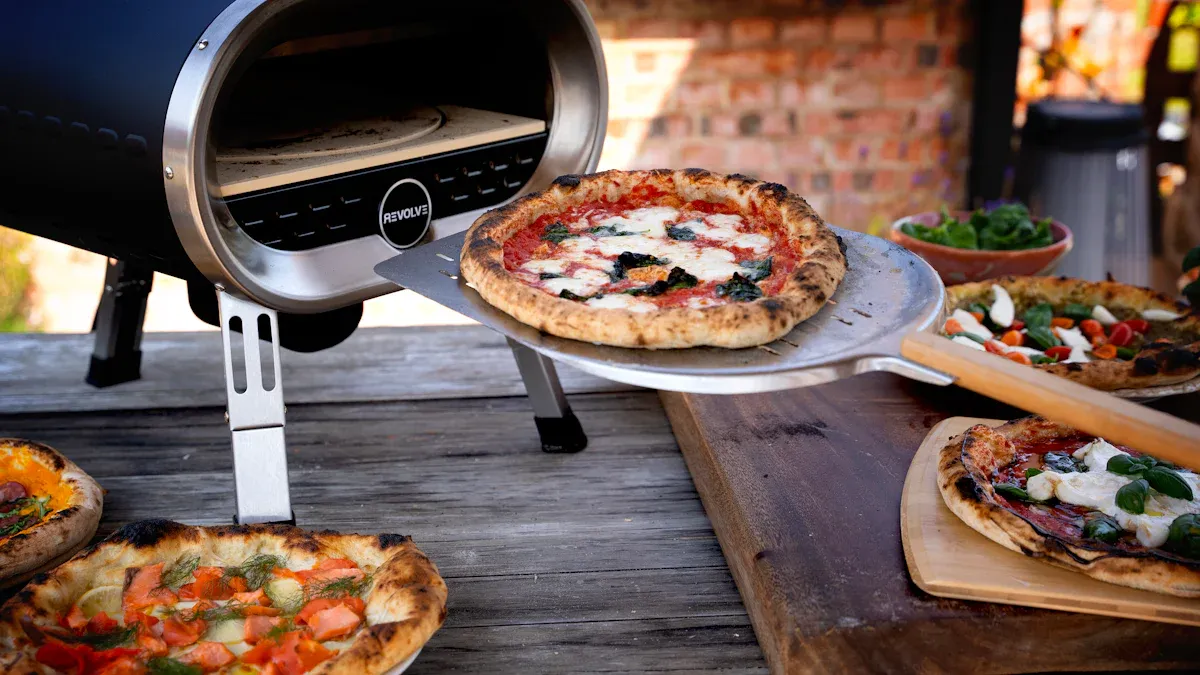
Achieving perfect pizzas consistently requires more than just a good oven. Maximizing the indoor pizza oven experience involves utilizing the right tools, selecting quality ingredients, and understanding how to troubleshoot common issues. These elements collectively elevate home pizza making to a professional level.
Essential Accessories for Your Indoor Pizza Oven
Proper accessories streamline the pizza-making process and enhance safety. Investing in these tools ensures efficiency and superior results.
Pizza peels and cutters
A pizza peel is a crucial tool for safely transferring pizzas into and out of a hot oven. Users can choose between wooden or metal peels, each offering distinct advantages. A high-quality pizza cutter ensures clean, effortless slices, maintaining the pizza’s integrity. A pizza turner also helps rotate pizzas for even cooking.
Infrared thermometers
An infrared gun accurately monitors the oven’s temperature, especially the baking stone. This precision ensures optimal cooking conditions, preventing undercooked or burnt crusts. Consistent temperature management is vital for authentic pizza.
Dough preparation tools
Beyond the immediate cooking process, dough preparation tools are essential. These include mixing bowls, dough scrapers, and proofing containers. An oven brush helps clean the oven and maintain hygiene. An all-weather cover protects and maintains the oven, extending its lifespan, particularly for versatile indoor/outdoor models.
Dough and Ingredient Selection for Optimal Indoor Pizza Oven Results
The quality of ingredients directly impacts the final taste and texture of the pizza. Careful selection is paramount for optimal results.
Best flours for pizza
Selecting the correct flour forms the foundation of a great pizza crust. “00” flour is ideal for Neapolitan-style pizzas, producing a light, airy crust with a slight chew. All-purpose flour works well for New York-style or thicker crusts. Different flours absorb water differently, affecting dough hydration and texture.
Quality cheese and sauce
High-quality mozzarella, preferably fresh, melts evenly and provides a rich flavor. Avoid pre-shredded cheeses, which often contain anti-caking agents affecting melt. A simple, fresh tomato sauce, made from San Marzano tomatoes, enhances the pizza’s natural flavors without overpowering them.
Topping considerations
Toppings should complement each other without overloading the pizza. Too many toppings can lead to uneven cooking and a soggy crust. Users should slice vegetables thinly and pre-cook meats to ensure they cook through quickly in the high heat of an indoor pizza oven.
Troubleshooting Common Issues with Your Indoor Pizza Oven
Even with the best equipment, occasional issues can arise. Understanding how to troubleshoot these problems ensures a smooth pizza-making experience.
Uneven cooking
Uneven cooking often results from inconsistent oven temperature or improper pizza rotation. Users should preheat the oven thoroughly and use an an infrared thermometer to confirm stone temperature. Rotating the pizza halfway through cooking helps ensure uniform browning.
Dough sticking
Dough sticking to the peel or stone is a common frustration. Users should flour the pizza peel generously before placing the dough on it. A quick, confident slide from the peel to the stone minimizes sticking. Avoid overloading the pizza with toppings, which can make transfer difficult.
Temperature management tips
Effective temperature management is key to perfect pizza. The infrared thermometer provides real-time temperature readings. Users should allow the oven to recover its heat between pizzas, especially after opening the door. Adjusting cooking times based on crust preference and topping density also helps.
Recipe Ideas Beyond Pizza for Your Indoor Pizza Oven
An indoor pizza oven offers versatility beyond just baking pizzas. Its high heat and consistent cooking environment make it suitable for various culinary creations. Users can explore diverse recipes, expanding their cooking repertoire.
Roasting vegetables
The intense, even heat of an indoor pizza oven excels at roasting vegetables. This method caramelizes natural sugars, enhancing flavor and texture. Chefs can roast a variety of vegetables, including bell peppers, zucchini, asparagus, and cherry tomatoes. The rapid cooking time ensures vegetables remain tender-crisp, not soggy. A light coating of olive oil, salt, and herbs is often sufficient. The oven’s high temperature creates a desirable char, adding depth to the dish. This quick roasting process preserves nutrients and vibrant colors.
Baking bread
Many indoor pizza ovens are also excellent for baking bread. The high temperatures and consistent heat retention mimic traditional brick ovens. This environment promotes a strong oven spring and a beautifully crisp crust. Users can bake artisan loaves, focaccia, or even dinner rolls. The baking stone provides direct heat to the bottom of the dough, ensuring a well-developed crust. Some models offer specific bread-baking modes, simplifying the process. Experimenting with different dough types yields varied results.
Other small dishes
The capabilities of an indoor pizza oven extend to numerous other small dishes. Its efficient heating makes it ideal for quick cooking tasks. Users can prepare appetizers like baked brie or stuffed mushrooms. Small casseroles or individual gratins also cook well in this environment. The oven’s design often allows for precise temperature control, accommodating delicate items. Some chefs even use it for searing small cuts of meat or fish, achieving a perfect crust. This appliance proves valuable for diverse culinary experiments.
Maintenance and Longevity of Your Indoor Pizza Oven
Proper maintenance significantly extends an indoor pizza oven’s lifespan. It also ensures consistent performance and delicious results. Regular cleaning and attentive care prevent issues and preserve the appliance’s quality.
Regular Cleaning Practices for Your Indoor Pizza Oven
Consistent cleaning routines are essential for any cooking appliance. They maintain hygiene and operational efficiency.
Food-grade non-stick coating care
Users should wipe the interior with a damp cloth after each use. This removes food particles and spills. Ensure the oven is cool before cleaning. For exterior surfaces, use mild soap and water. This removes dirt and residue. Avoid harsh cleaning chemicals. They can damage the oven’s exterior coating and internal surfaces. Always use oven-safe tools and cleaning products. This prevents damage to the specific oven type.
Removable baking plate cleaning
Brush residual ash and debris from the cooking surface using a pizza oven bristle brush. Remove crumbs and burnt bits from the oven deck or trays. Clean spills immediately. This prevents sauces, cheese, or oil from hardening. Hardened spills become difficult to remove. Regularly remove ash from the oven. This maintains cleanliness and prevents buildup.
Hygienic operation
Consistent cleaning enhances the oven’s performance. It ensures pizzas always taste fresh. Regular maintenance prevents food, grease, and ash buildup. This buildup can affect flavor. It can also pose a fire hazard if neglected.
Long-Term Care for Your Indoor Pizza Oven
Long-term care involves periodic inspections and adherence to guidelines. This protects the oven’s components and functionality.
Material durability
Inspect oven doors and seals regularly. This ensures heat is not escaping. Check for any signs of wear or damage. Address these issues promptly. Inspect seals and joints for cracks or damage.
Manufacturer guidelines
Always follow the manufacturer’s guidelines for care and service. Avoid using harsh cleaning chemicals inside the oven. Never overload the oven beyond its capacity. Proper use prevents undue stress on components.
Preventing wear and tear
Vacuum ventilation and fans periodically. Dust and grease buildup can block airflow. This affects performance. Deep clean the interior. Scrub oven decks or stone surfaces with approved tools. This maintains even heating. Check gas lines and connections for gas ovens. Ensure no leaks or obstructions exist. Inspect electrical components for electric ovens. Check for wear and tear in wiring or controls. For models with chimneys, use a chimney brush. This removes soot and ash buildup. It prevents fire hazards and maintains efficient airflow.
When to Seek Professional Service for Your Indoor Pizza Oven
Knowing when to call a professional saves time and prevents larger problems. It ensures the oven operates safely and efficiently.
Identifying performance issues
Inspect for damage. Check any signs of wear or damage. Address them promptly. Test functionality. Ensure all components, including the door and chimney, function properly. If the oven struggles to reach temperature or cooks unevenly, professional help may be necessary.
Warranty considerations
Understand the warranty terms for your indoor pizza oven. Many warranties cover specific parts or issues for a set period. Unauthorized repairs can void a warranty. Consult the manufacturer before attempting complex fixes.
Authorized service centers
Scheduling professional servicing at least twice a year is highly recommended. Trained technicians can test and calibrate temperature controls. They inspect hidden components like thermostats, gas valves, or wiring. They also replace worn-out parts before they cause major issues. This proactive approach prevents expensive repairs. It ensures compliance with food safety standards.
Selecting the ideal indoor pizza oven demands careful consideration of its type, features, power, and budget. These elements must align with individual cooking needs. Evaluating personal cooking habits and available kitchen space ensures the best possible fit. Making an informed decision guarantees enjoyment of delicious, homemade pizza. A thoughtfully chosen indoor pizza oven delivers long-term satisfaction and culinary delight.
FAQ
What temperature should an indoor pizza oven reach?
An indoor pizza oven should reach at least 500°F (260°C) for authentic pizza. High-performance models can achieve 750°F (400°C) or more. This intense heat creates a crispy crust and cooks pizza quickly.
Is it safe to use a gas pizza oven indoors?
Using a gas pizza oven indoors requires professional installation and robust ventilation. A high-CFM ducted range hood is essential. This prevents carbon monoxide buildup. Safety protocols must be strictly followed.
How quickly do indoor pizza ovens heat up?
Heat-up times vary by model. Many electric ovens preheat in 20-30 minutes. High-end electric or gas models can reach optimal temperatures in 10-20 minutes. Rapid preheating enhances convenience for users.
What is the best material for a pizza stone?
Cordierite and ceramic are popular choices for pizza stones. Cordierite offers superior durability and thermal shock resistance. Both materials retain heat effectively. They contribute to a crispy pizza crust.
Do indoor pizza ovens require special electrical outlets?
Most smaller electric indoor pizza ovens use standard 120V outlets. High-performance models often require a dedicated 240V circuit. Users should consult an electrician. This ensures their home’s electrical system can support the oven.
How should I clean my indoor pizza oven?
Users should wipe the interior with a damp cloth after each use. Remove food particles and debris from the baking plate. Avoid harsh chemicals. Regular cleaning maintains hygiene and performance.
Can I cook foods other than pizza in my indoor pizza oven?
Yes, many indoor pizza ovens are versatile. They can roast vegetables effectively. Users can also bake bread or prepare small dishes. The high, consistent heat is suitable for various culinary tasks.